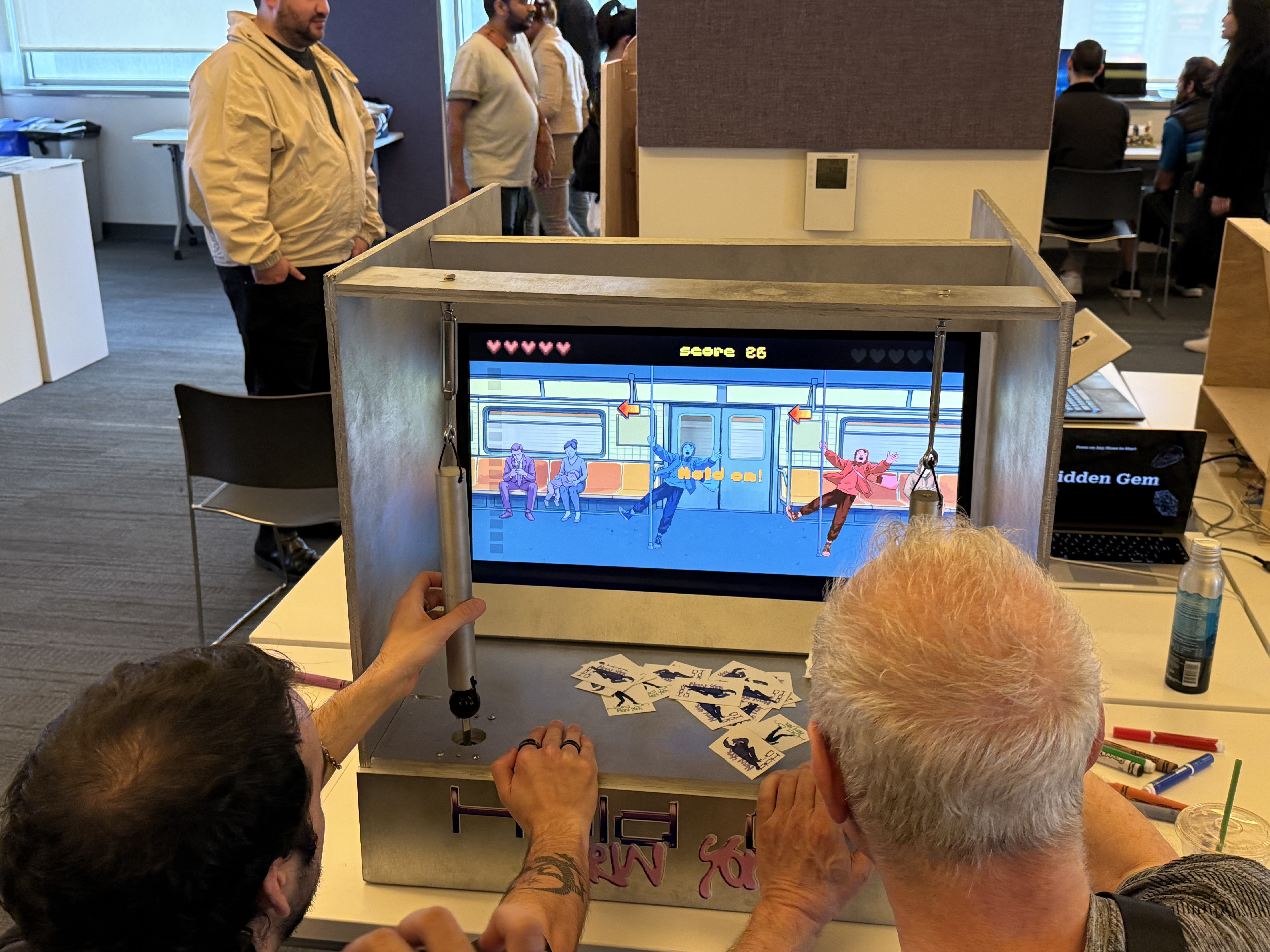
Hold On, New York! started as a class project for The New Arcade at ITP and turned into something none of us expected. The brief was straightforward enough: build an alt-ctrl arcade game, something that goes beyond a keyboard and screen, something physical. Four of us got together and decided to make a game about the one shared experience every New Yorker knows too well: the subway.
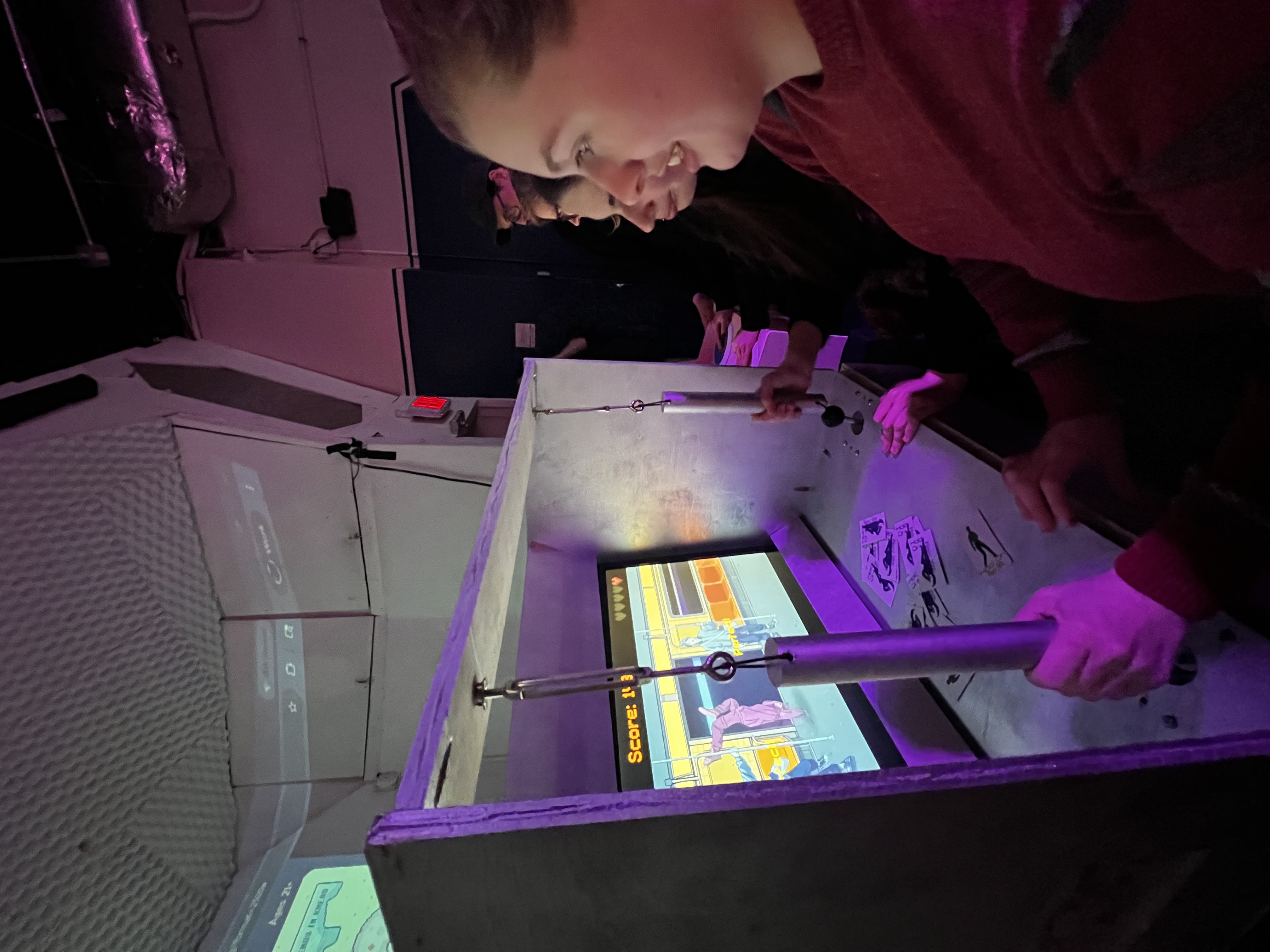
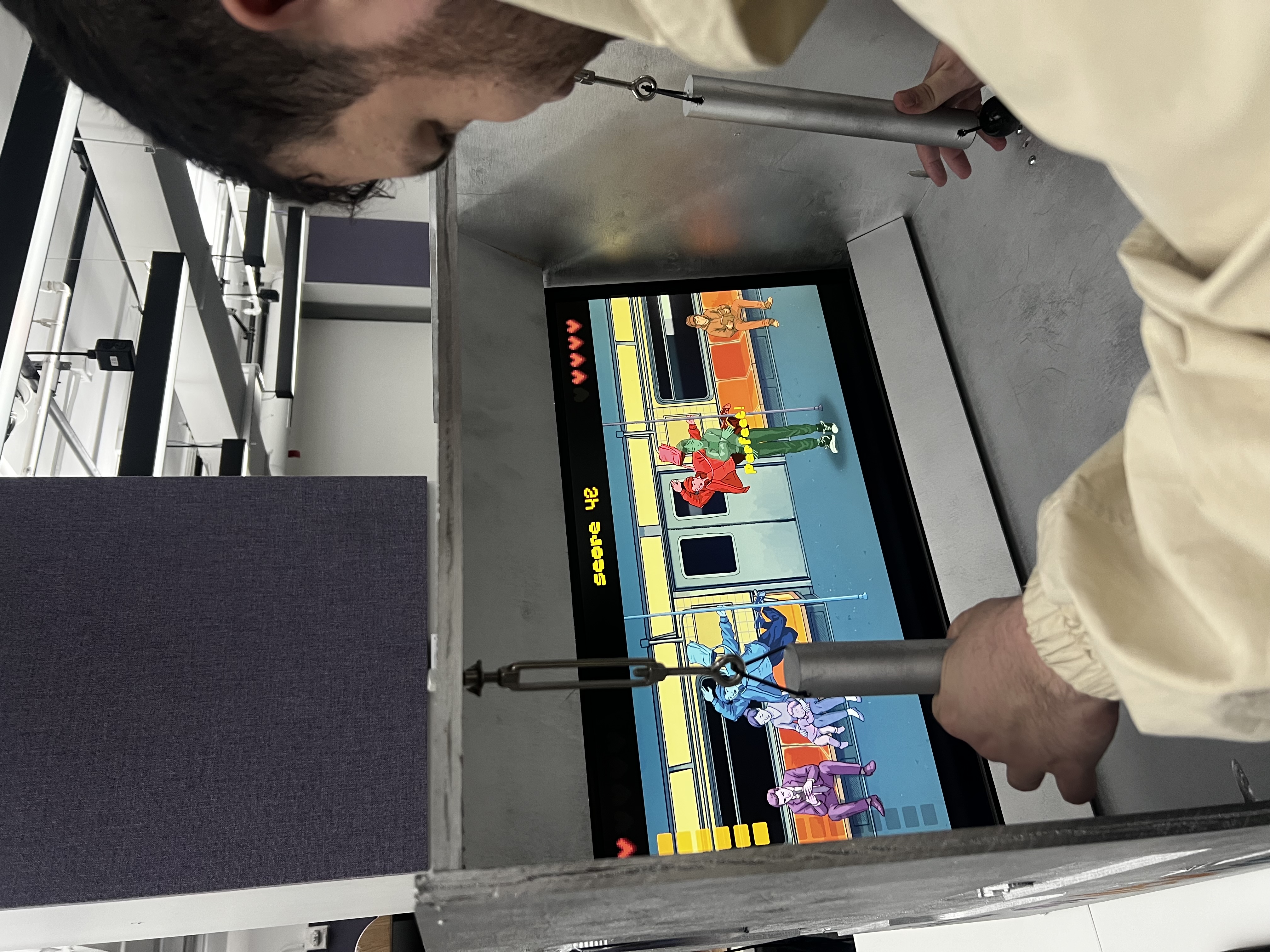
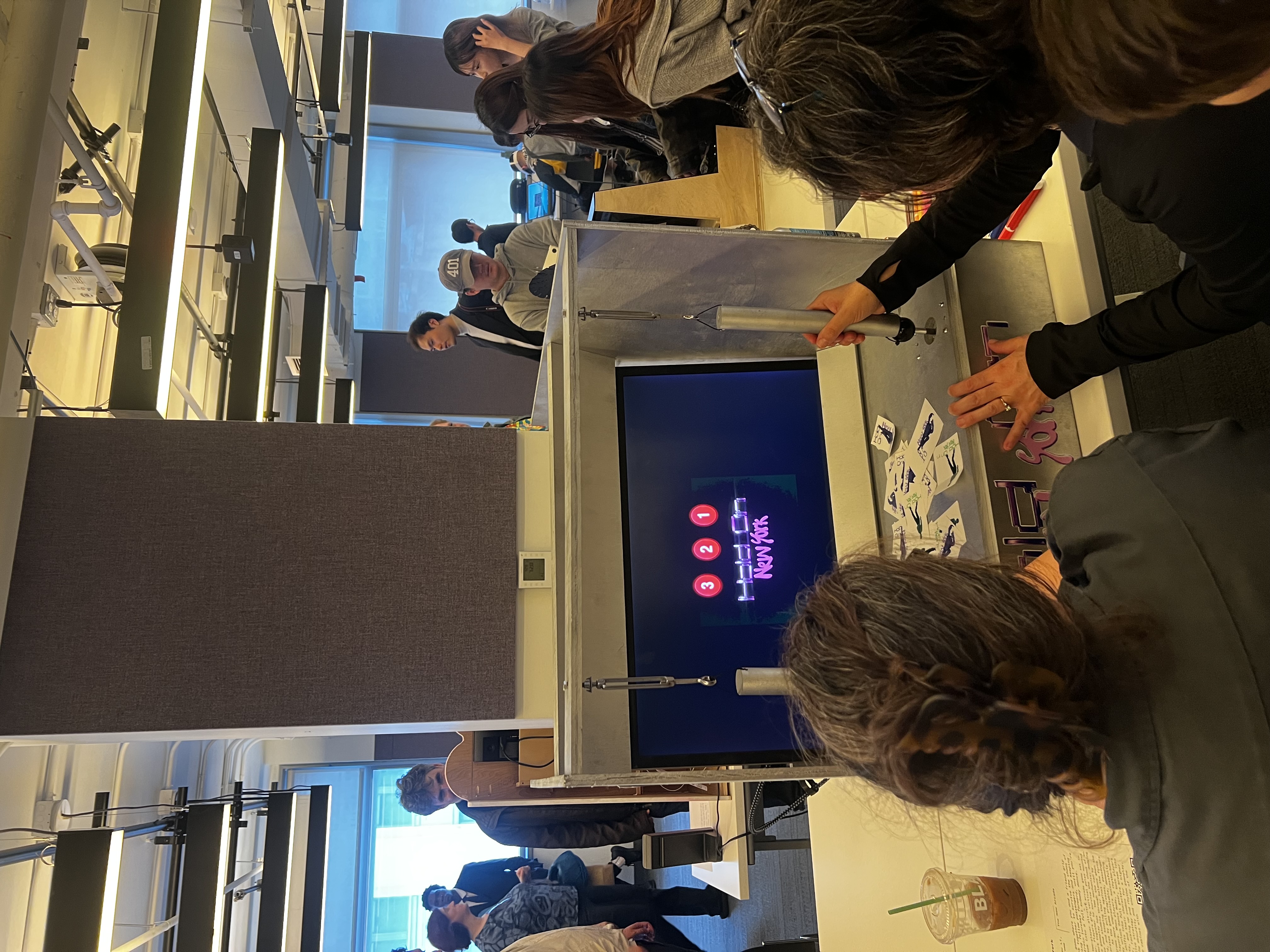
The game puts two players on a pair of vertical subway poles mounted to a custom arcade cabinet. You grip the poles, you lean, you dodge fellow passengers, and you try to keep your balance as the simulated train lurches forward and brakes without warning. Survive long enough and the music kicks in, the game shifts into a rhythm-based dance round, and suddenly you and your partner are hitting arrow prompts and racking up combos while your hand-drawn characters bust moves on screen. The whole thing lasts about three minutes per round, which turned out to be the perfect length for the kind of crowd we ended up drawing.
Hand-Drawn, Frame by Frame
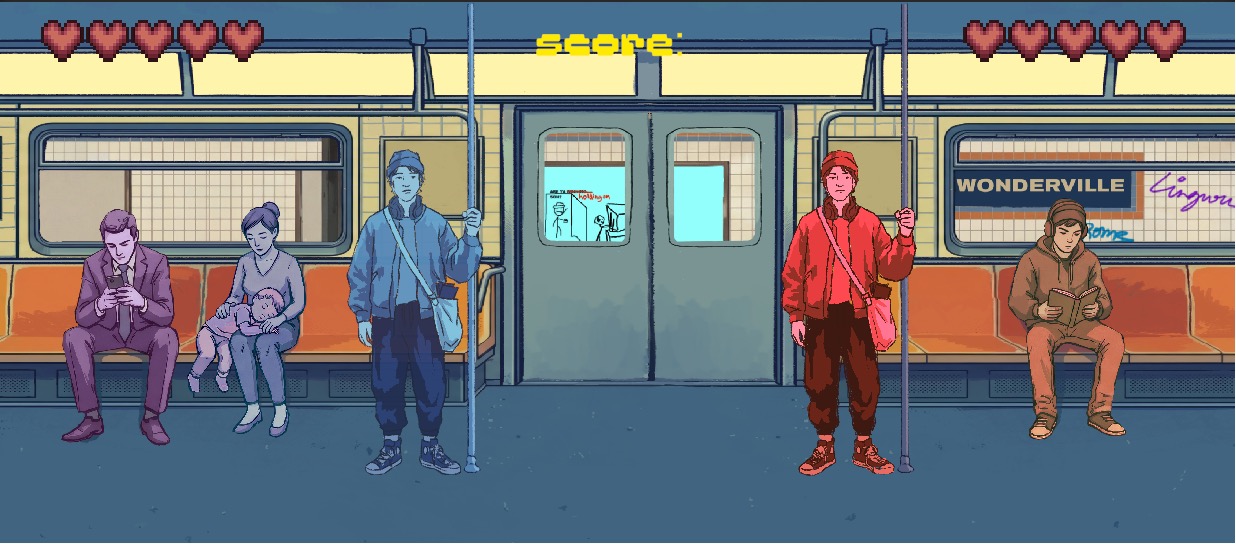
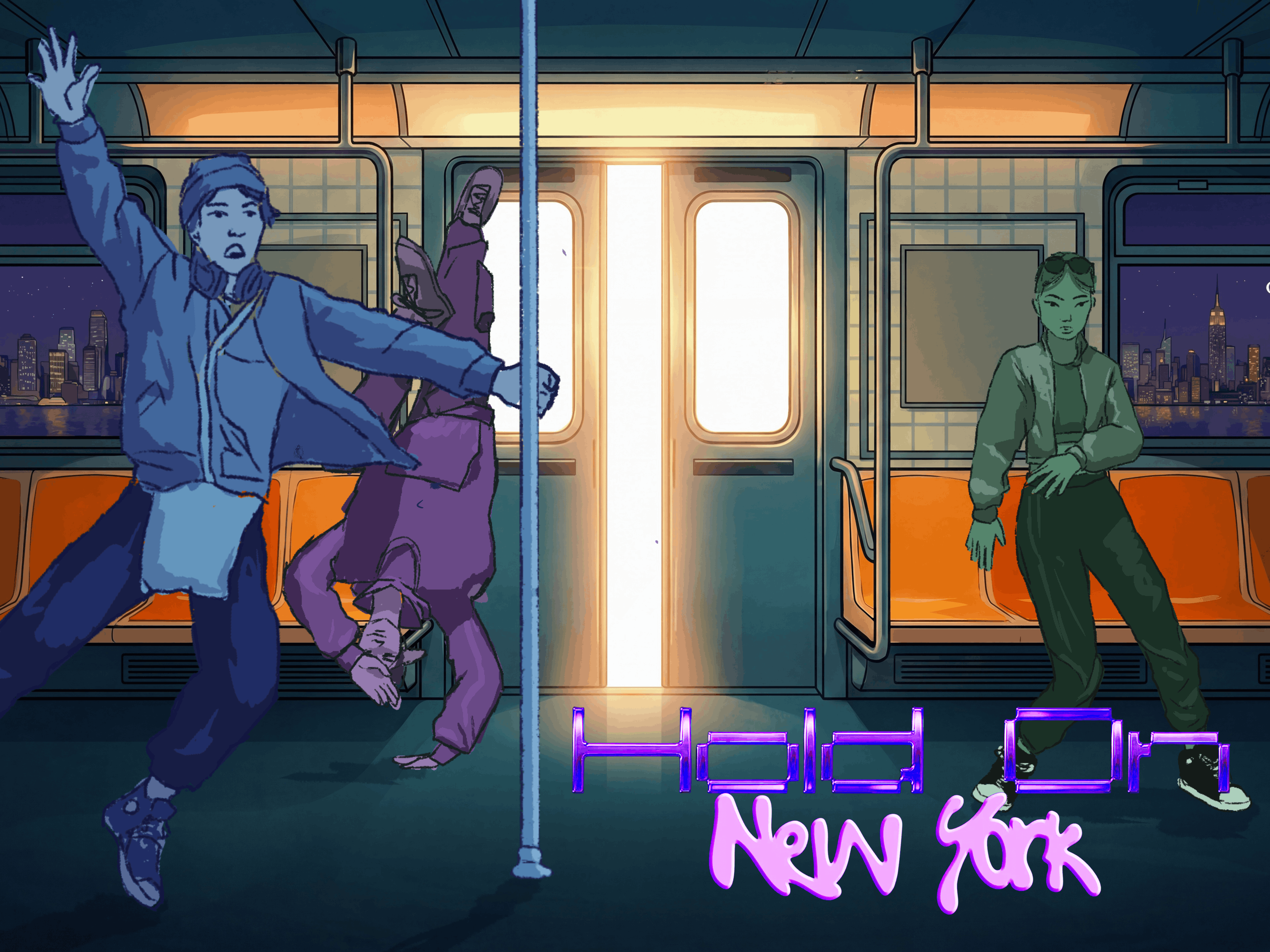
I come from an animation background, and one of the things I wanted most from this project was to see how my animated characters could become interactive. How people would process and respond to art that was designed to move and react in real time rather than just play on a loop. Every single character in Hold On, New York! was drawn by hand in Procreate, frame by frame. I drew four sides of each character, general directional poses, and then rigged them using Mixamo to get the dance animations working. The dances themselves were choreographed to match Ian's music, so the whole thing feels locked in when it hits that rhythm round. Beyond the characters, I drew all the other in-game assets too: the subway interior, the passengers, the UI elements. Every single visual in this game came from a hand and a stylus, not a prompt box.
Once the assets were ready I handed everything over to Lingwu, who plugged it all into Unity. Watching my drawings come alive inside a game engine, responding to player input, colliding with other sprites, reacting to the train physics, that was genuinely one of the most satisfying things I have experienced as an artist. This was the exercise I had been looking for: how best can I make my animated characters interactive, and add a layer where people directly interact with and process my art.
Bringing in After Effects
The hand-drawn assets covered the gameplay, but there were moments in the experience that needed motion design rather than sprite animation. I had to bring in After Effects to fill those gaps. One of those was the station arrival sequence. I wanted the feeling of the train pulling into a station to have weight and atmosphere beyond what the game engine was doing on its own, so I designed and animated that transition separately.
I also used After Effects to design a custom title card intro and a set of instruction screens. These played as video sequences every time a player pulled the pole to trigger the next stage. Rather than static text overlays, I wanted these moments to feel like part of the game's visual world, so I animated them with the same energy and style as everything else.
Beyond the Screen
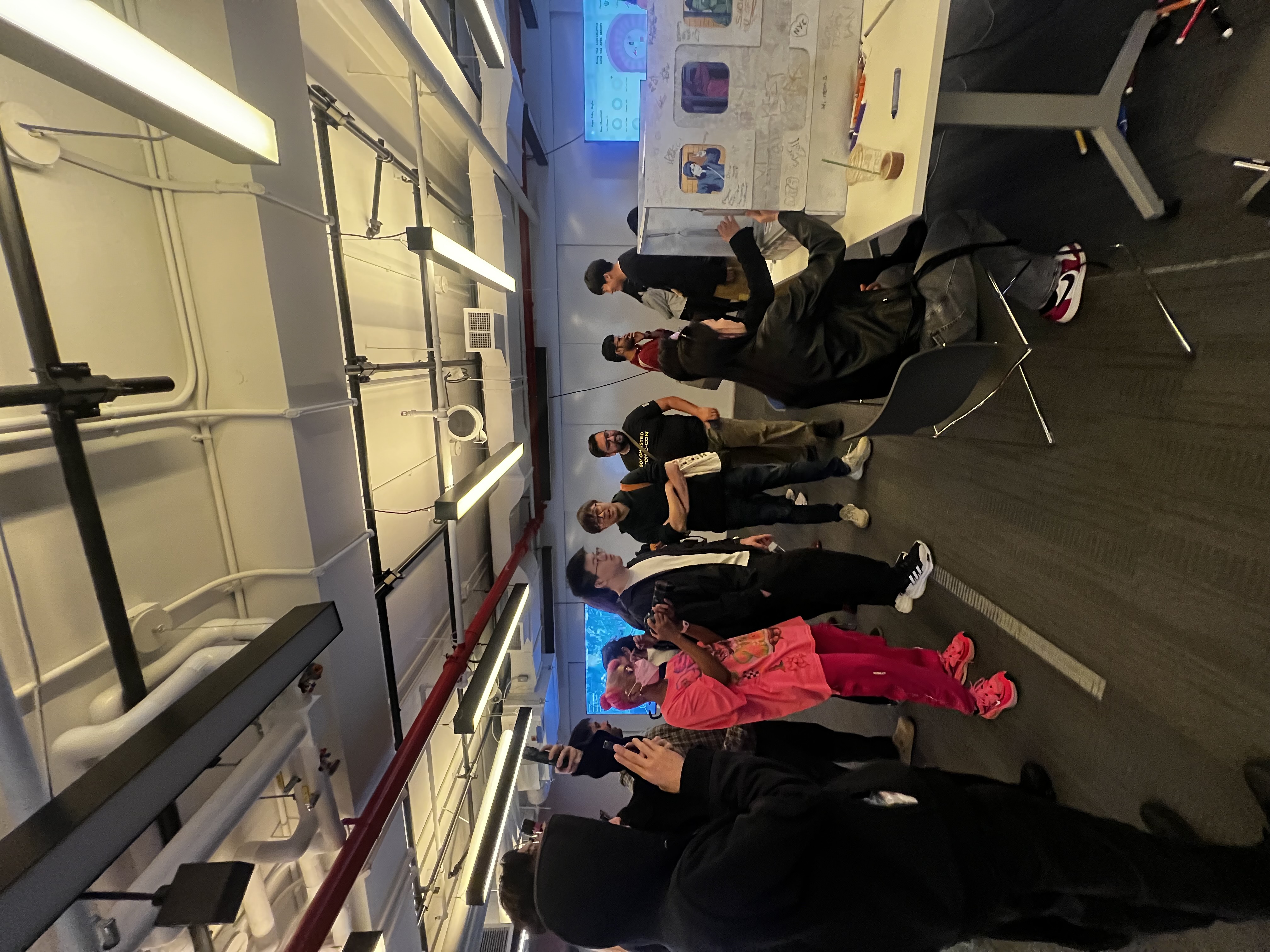
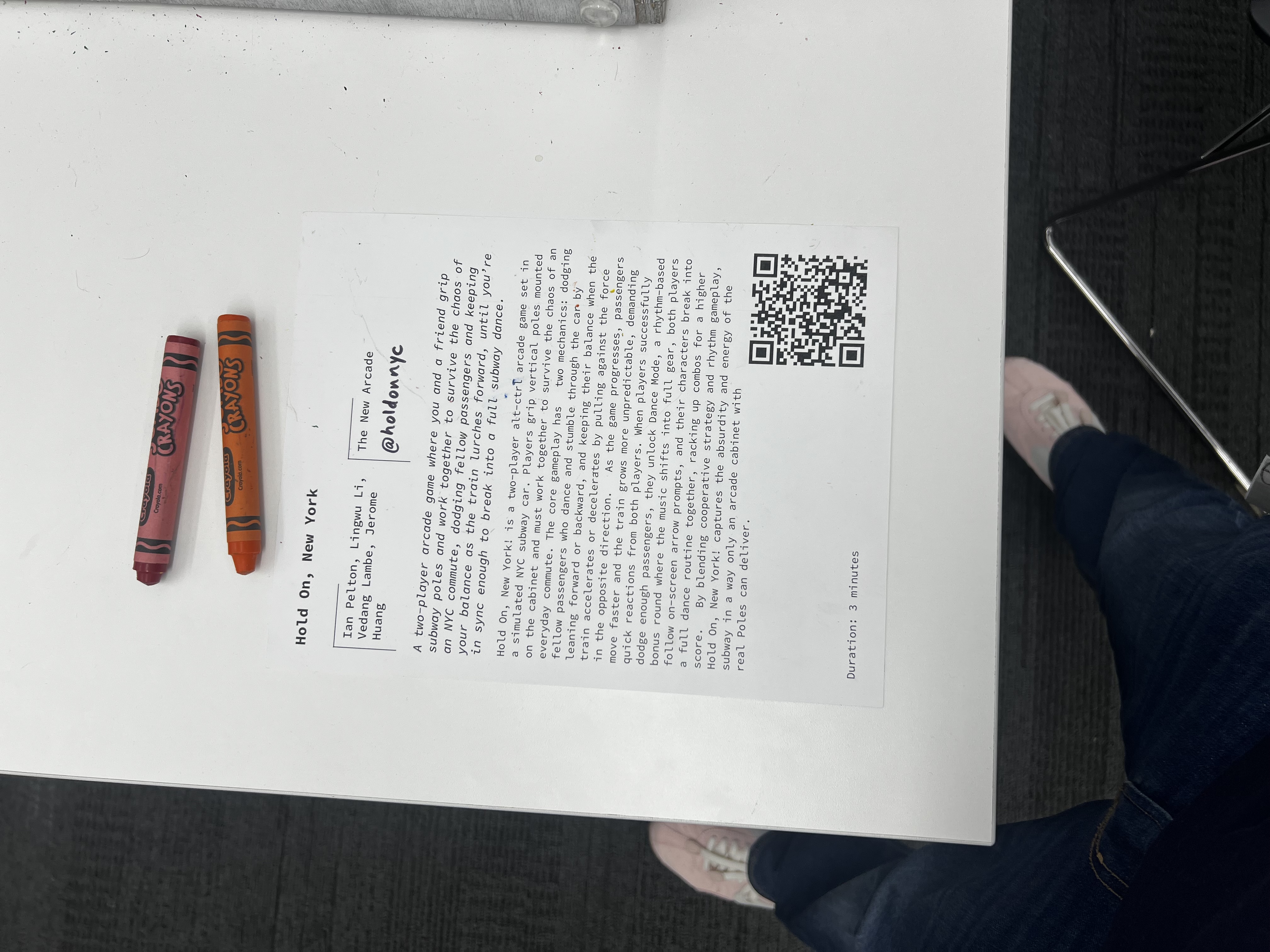
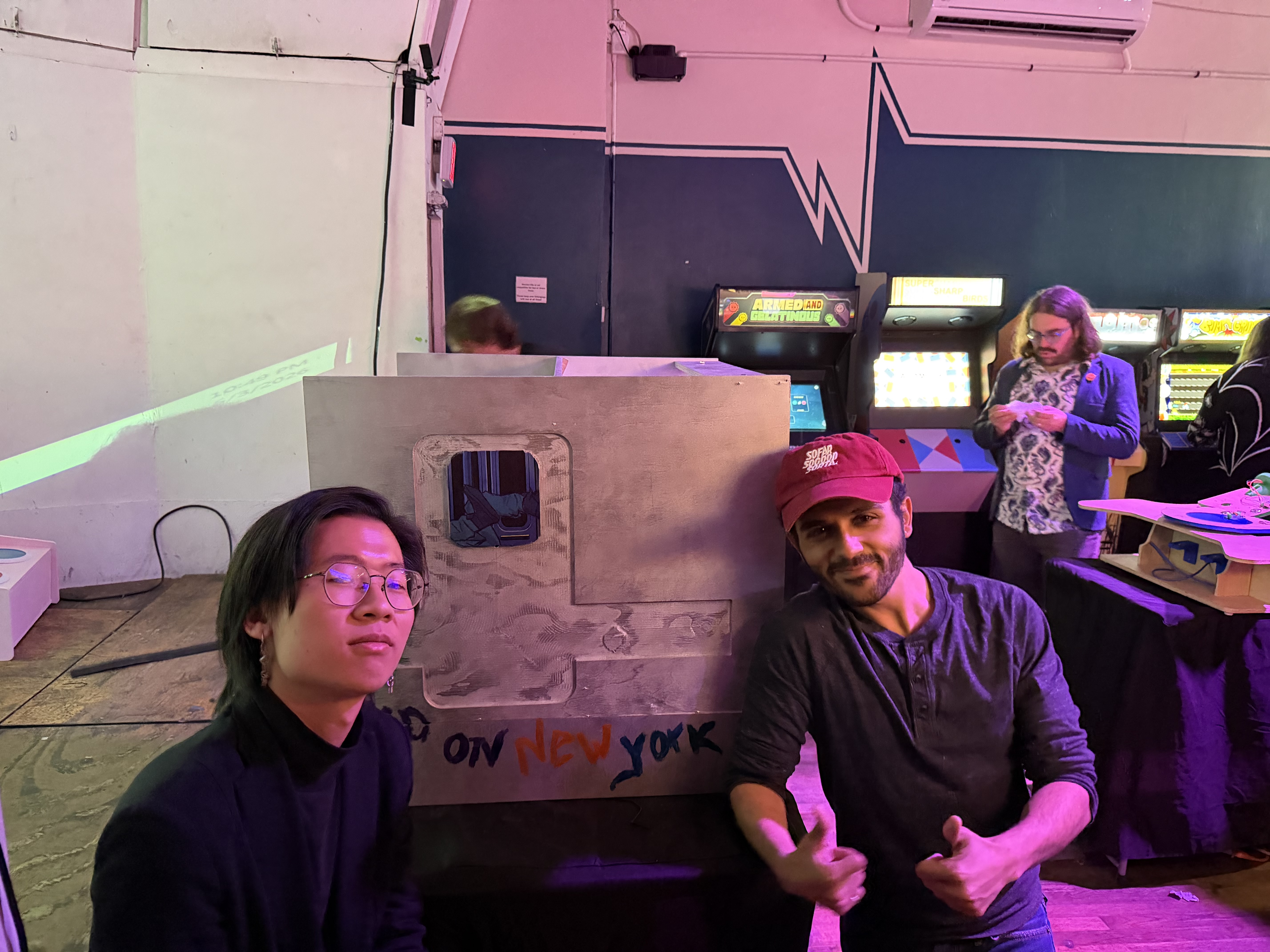
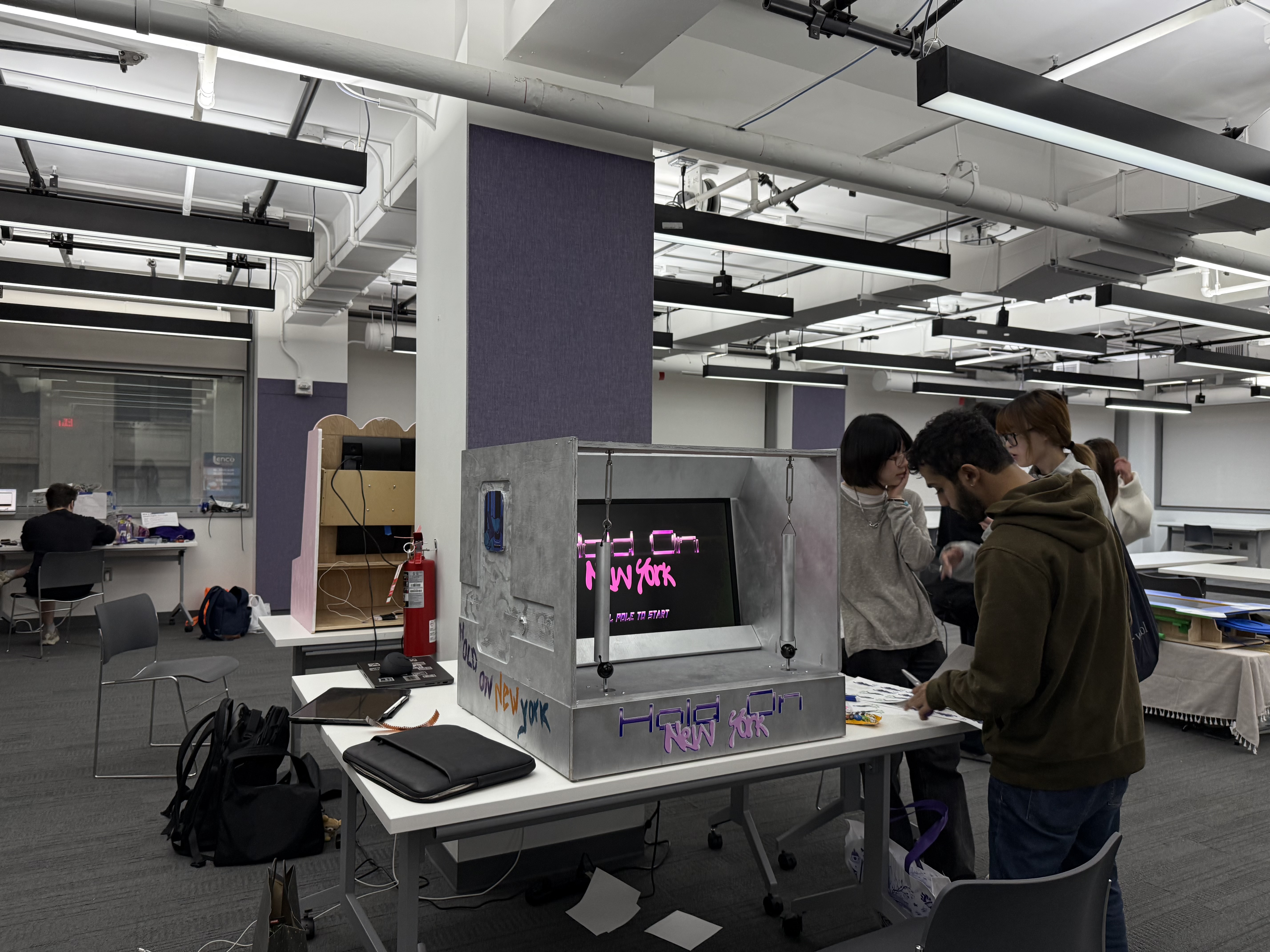
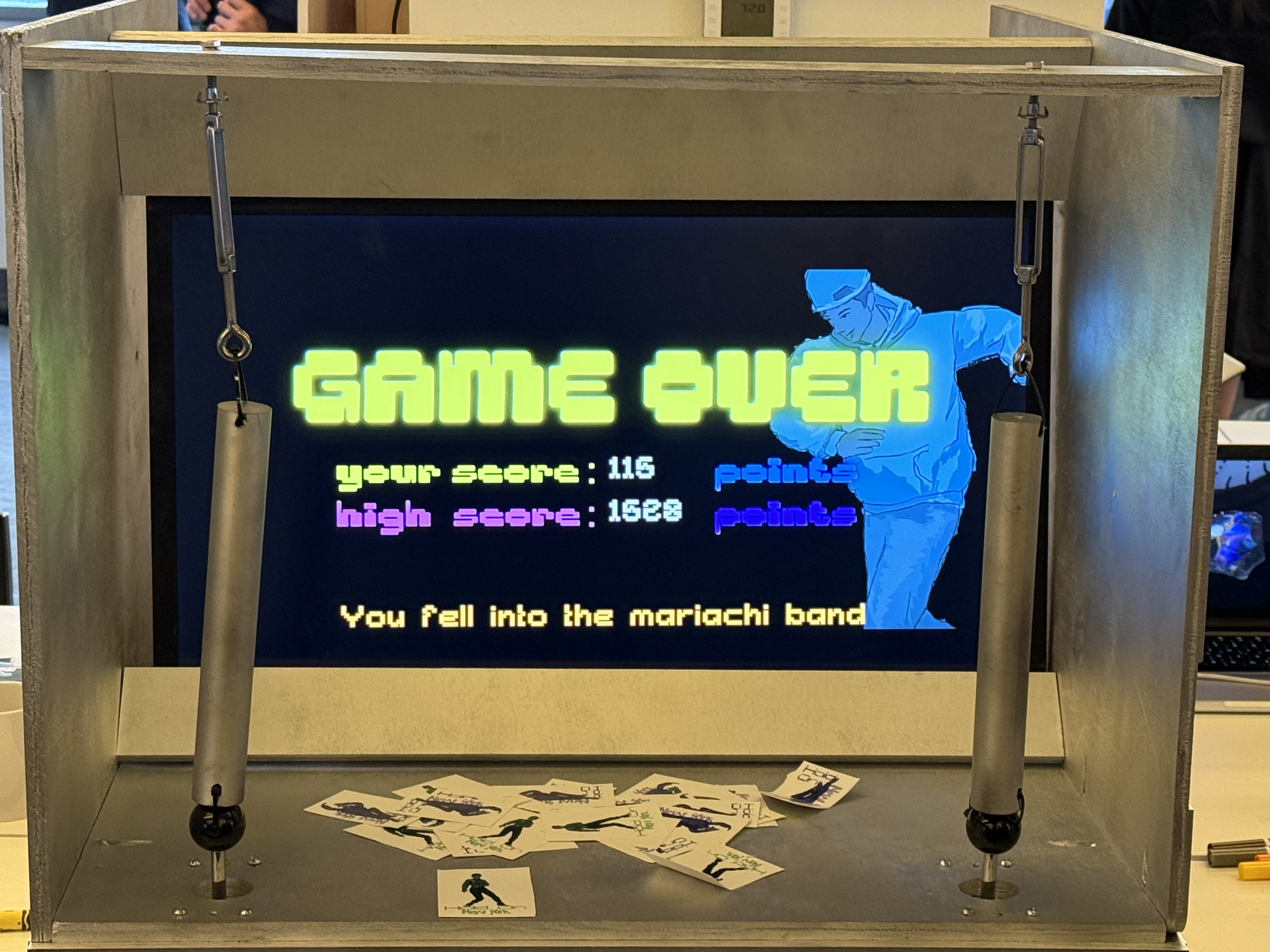
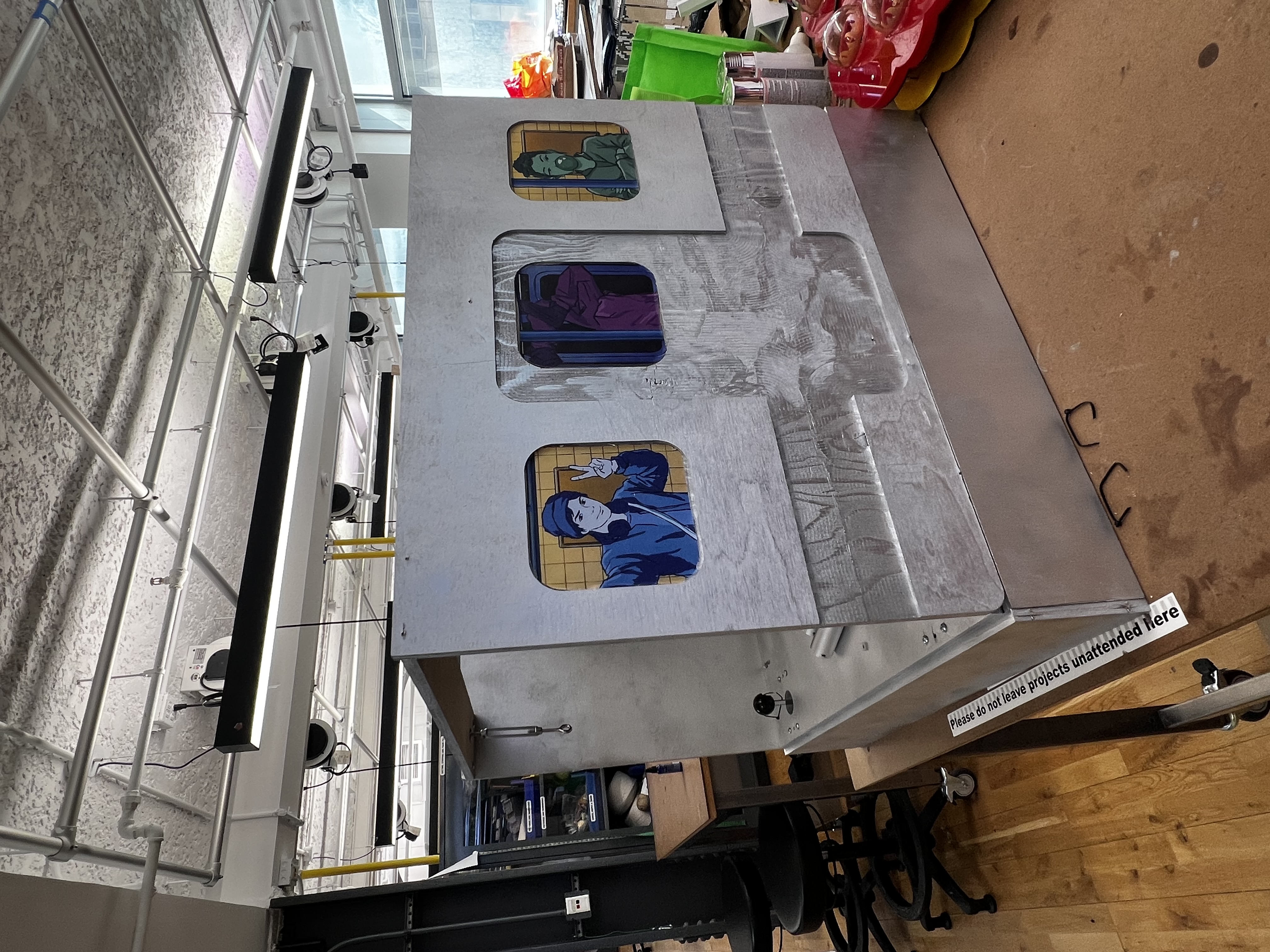
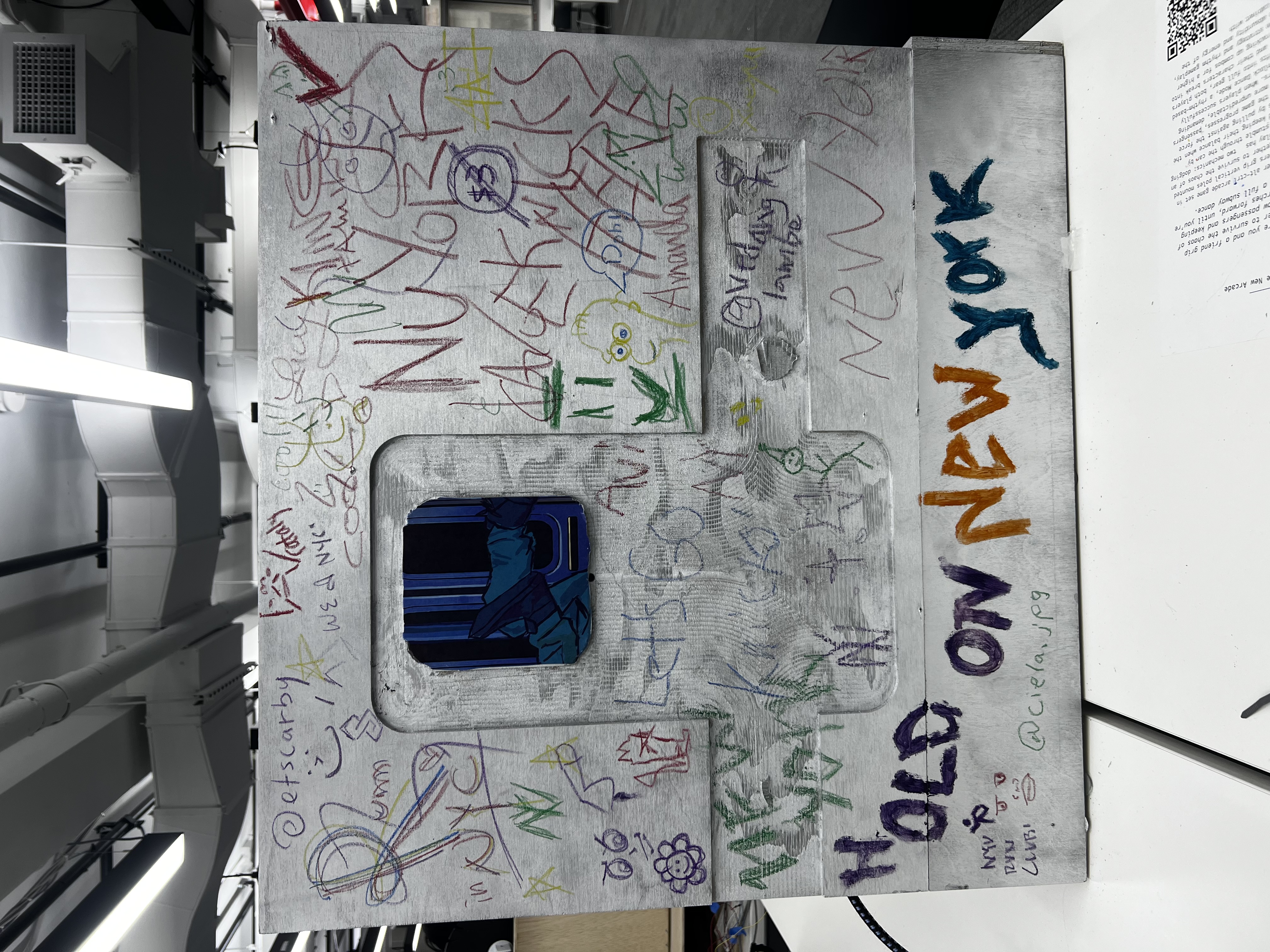
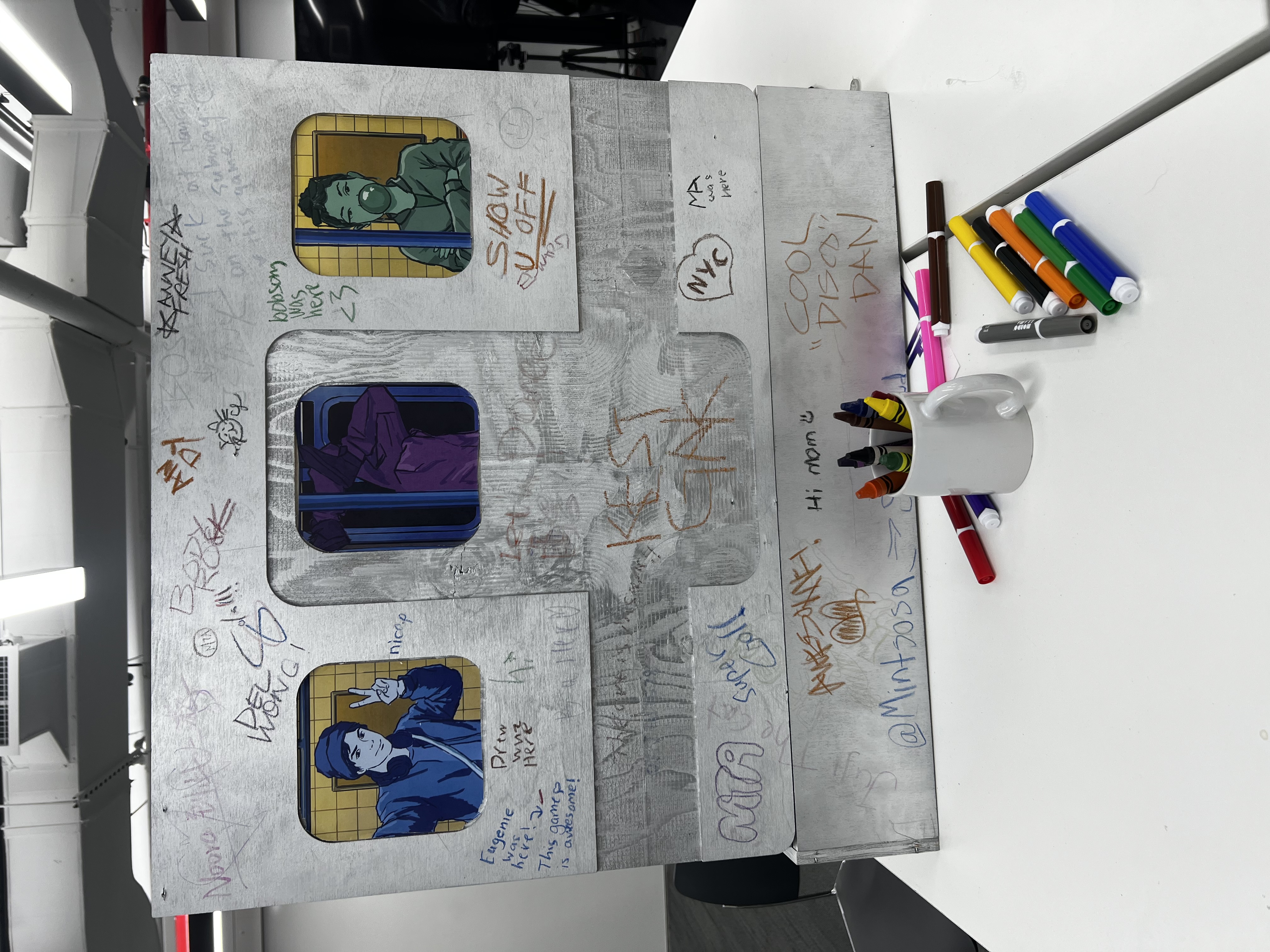
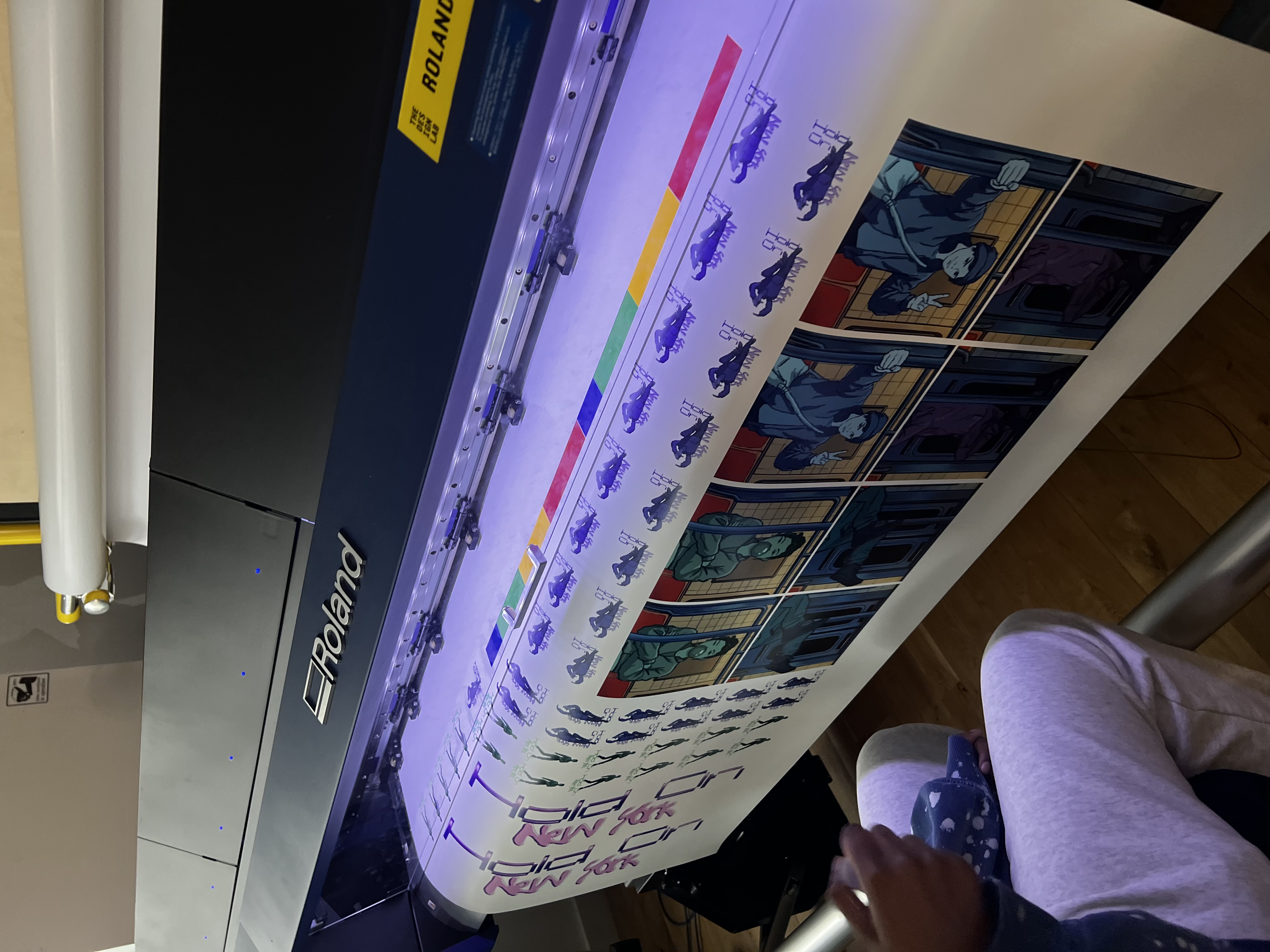
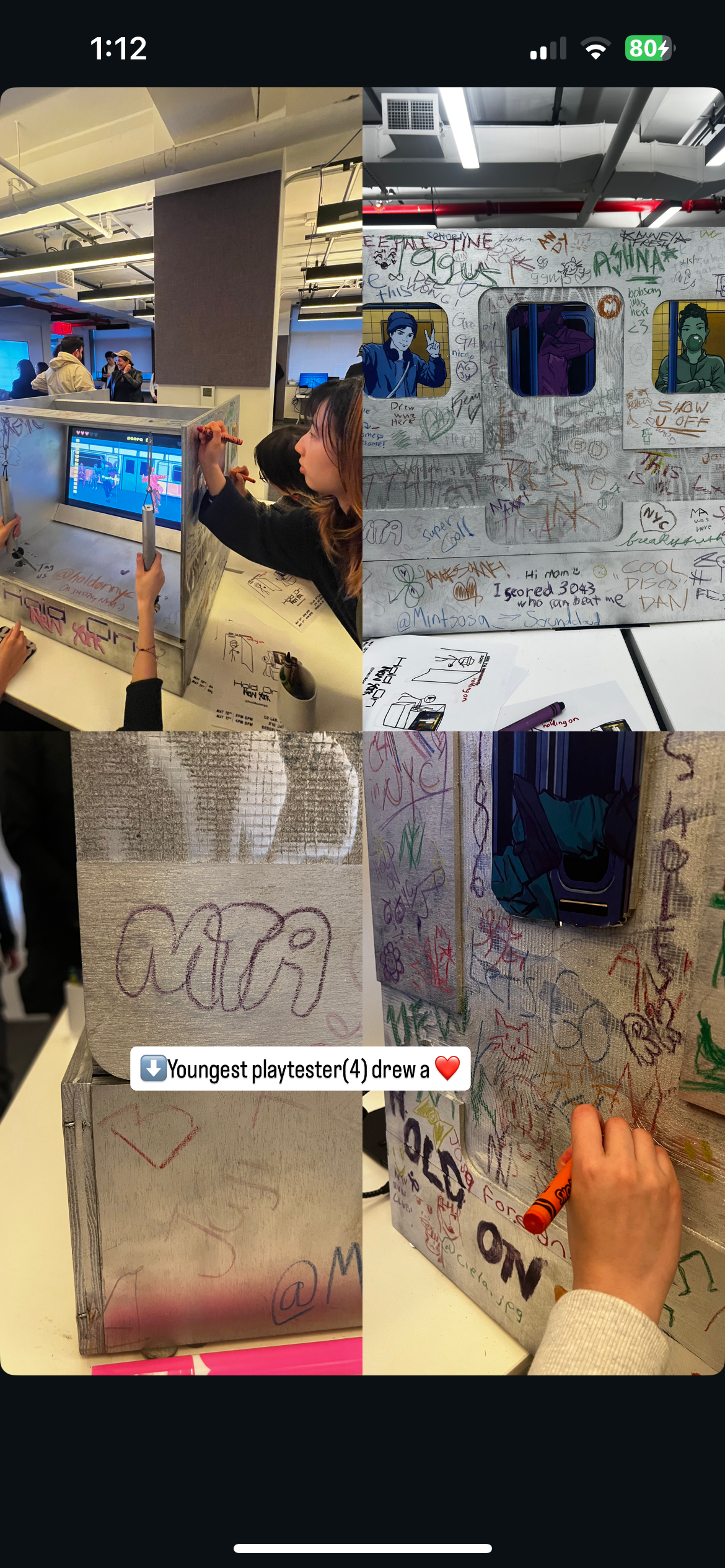
The game was never just about what happened on the monitor. We wanted the entire cabinet to feel like a piece of the subway had broken off and landed in the middle of ITP. Ian and I spray-painted the wooden box chrome silver to make it look like actual metal subway construction. I designed and printed vinyl stickers and actual vinyl decals that we stuck onto the sides of the cabinet, giving it that tagged-up, lived-in subway feel. And then we added one more layer that ended up being one of the best decisions we made: crayons. We left crayons out and invited everyone, especially kids, to draw and write and "tag" themselves on the sides of the cabinet. By the end of each day the machine looked completely different, covered in drawings and names and little messages. It added a whole other dimension to the experience and made the game feel like it belonged to everyone who played it.
I also made a poster for the project, originally designed as a kind of inside joke about how movie and game posters always showcase scenes that do not actually exist in the final product. But then I realized the classic "are ya winning son" meme format made way more sense for what we were going for, so I went with that instead. It got a lot of laughs.
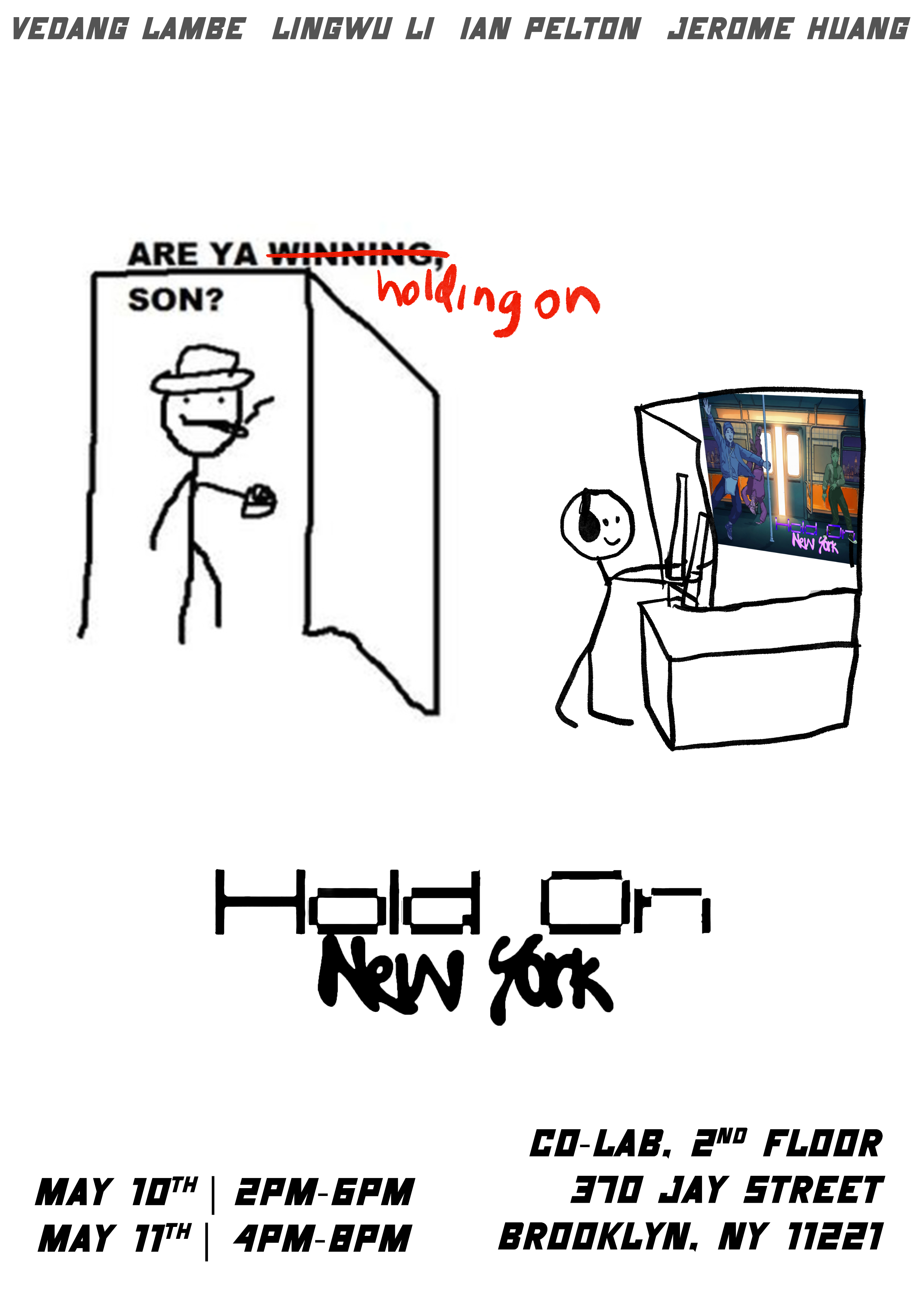
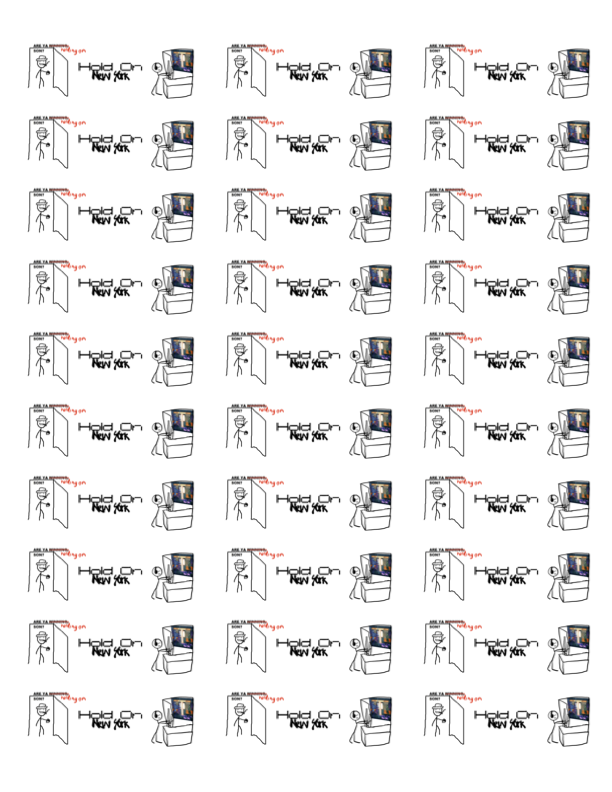
That creative direction choice ended up doing more than just getting laughs. It set the tone for the whole player experience before anyone even touched the poles. People walked up already smiling, already in on the joke, and that looseness carried into how they played. Nobody was intimidated by the game because the poster had already told them this was not something that took itself too seriously. It was an invitation to be goofy. The meme poster became stickers too, because people loved the inside joke so much they wanted to take it home. Kids especially found it hilarious. A four-year-old does not care about a cinematic subway illustration, but a stick figure dad peeking around a door at an arcade cabinet gets them every time.
The ITP Spring Show
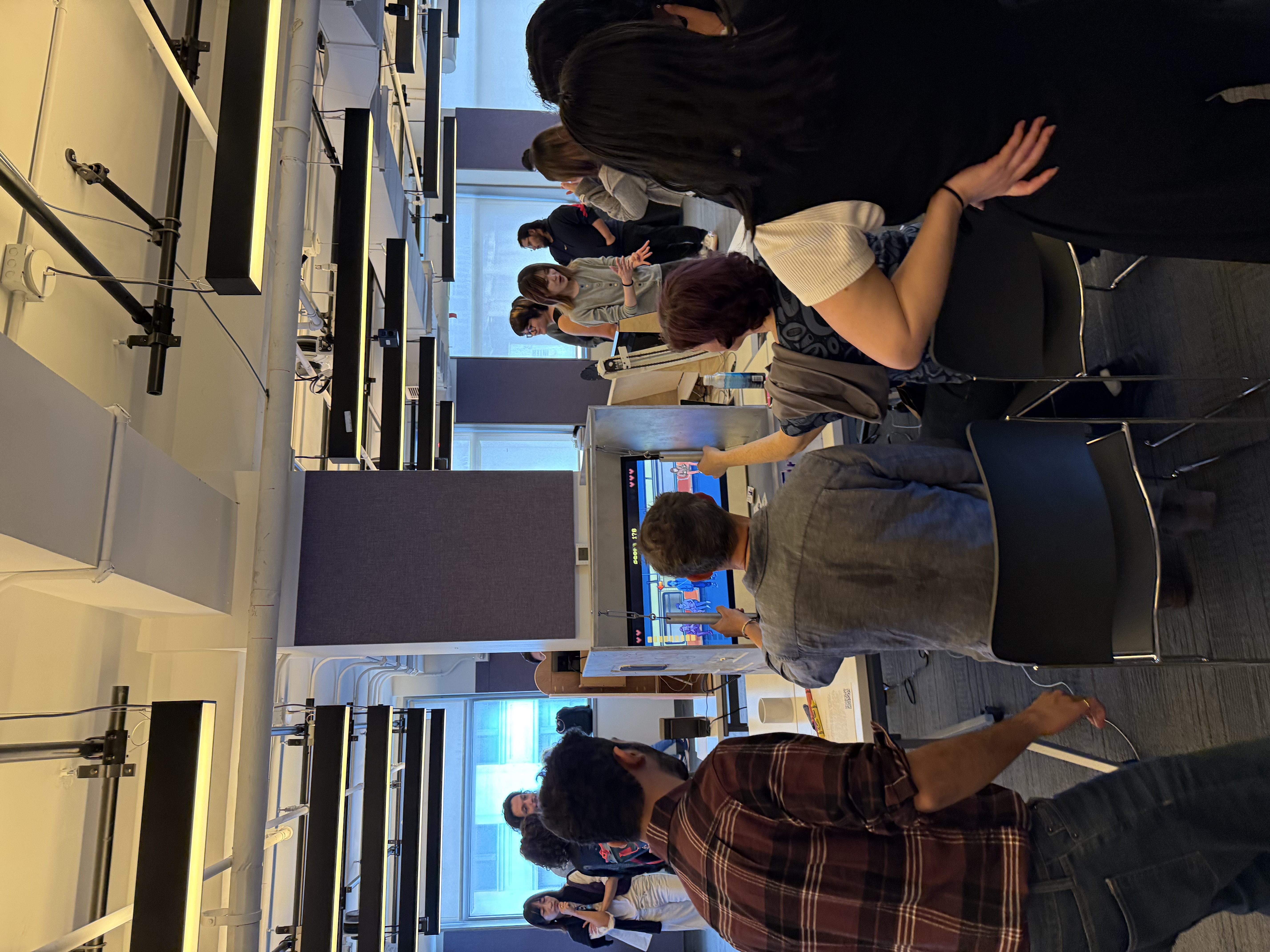
The response to Hold On, New York! at the ITP Spring Show was something else entirely. We had lines. Actual lines of people waiting to play, wrapping around other installations. On Day 1 we could barely keep up. Museum curators came by and multiple people brought up Wonderville, asking when we were going to showcase there. I happened to advertise the class in a way too, talking to visitors about The New Arcade and what we were building, which sparked a lot of interesting conversations about arcade culture and alt-ctrl design.
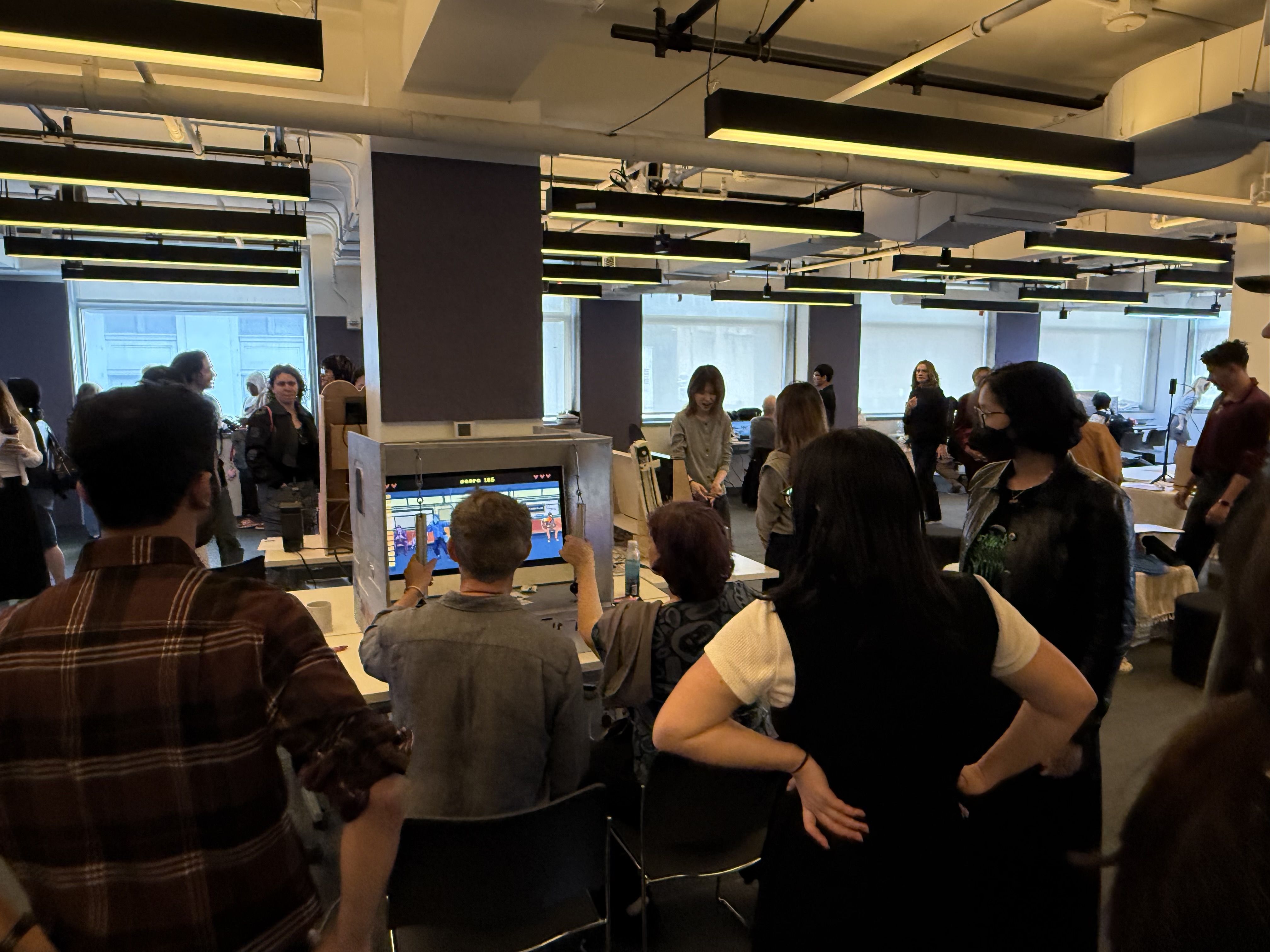
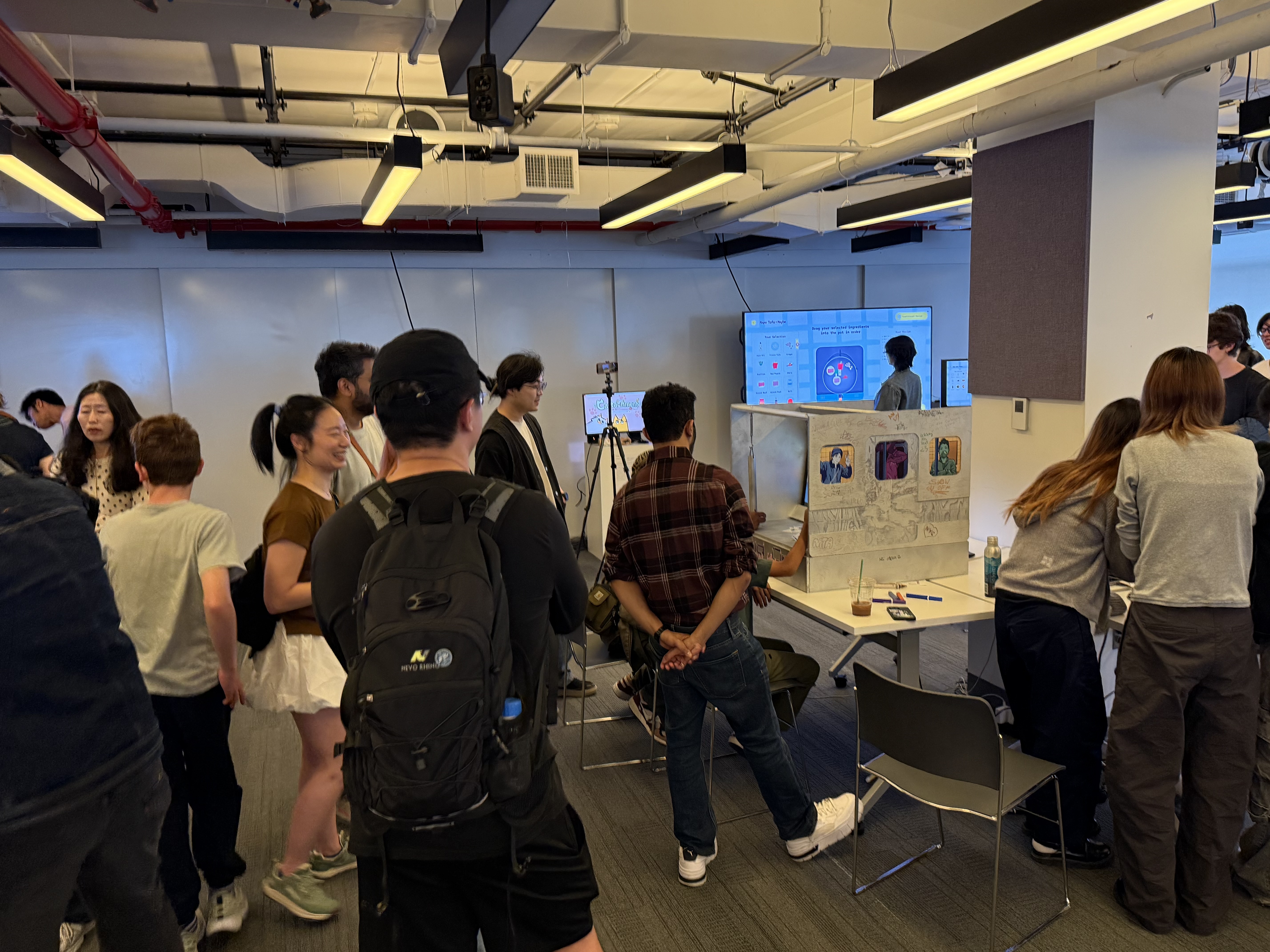
What really stood out was how the conversations kept circling back to the fact that everything was hand-drawn. People could tell. They responded to it. In a moment where so much visual work is being generated through AI, visitors were genuinely excited to see organic, human-designed characters with all the small imperfections and personality that comes from someone actually sitting down and drawing each frame. I brought up my animation and art direction background in those conversations, and the topic of AI in art came up again and again. People are tired of that look. They want to see the hand behind the work. That feedback meant a lot and confirmed something I already believed: the craft matters, and people can feel the difference.
The numbers backed it up too. I printed 100 stickers each day and only gave them out to people after they played. On Day 1 they ran out within two hours. On Day 2, within three hours. That gives you a pretty clear picture of the foot traffic and attention our game was getting.
Watching People Play
One of the most valuable parts of showing this game was watching the range of people who played it. We had players aged 4 to 67. Watching a four-year-old grip the poles and try to figure out the mechanics versus a grown adult leaning into the competitive dance round gave me real data on how my sprites were being read. Did they understand the character design and motion? Did the visual feedback make sense? How did different ages react to the dodge mechanics versus the rhythm section? All of that is going directly into how we iterate this further.
I see Hold On, New York! as a cohesive game with a combined design that does not take itself too seriously. Three of us moved to New York from different parts of the world and are now making a game about the NYC subway, and then there is Ian, a born New Yorker, bringing that native energy and instinct to the music and the feel of the thing. Seeing those influences coexist in the gameplay and visuals is really interesting. The outsider wonder and the local grit sitting right next to each other.
What Comes Next
The response was big enough that we had to make an Instagram (@holdonnyc) because people at the show kept asking where they could follow the project. We are bringing the game to the actual subway at the end of this month, and I am curating and creative directing a photo series to document it, working with an event producer we met at the Spring Show. All the social media assets are produced by me, designed in After Effects and Photoshop, and again, made by an actual person.
This was a very rewarding combined effort of four strong individuals. I learned so much about teamwork and effective communication, about how to hand off assets cleanly, how to trust someone else with your drawings, how to let the music lead the animation decisions, and how to compromise when the game design needs something different from what looks best. I am bringing all of that into my future collaborations.